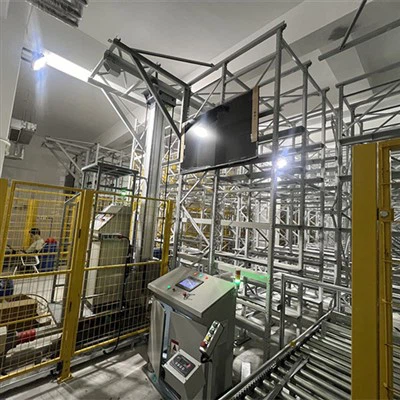
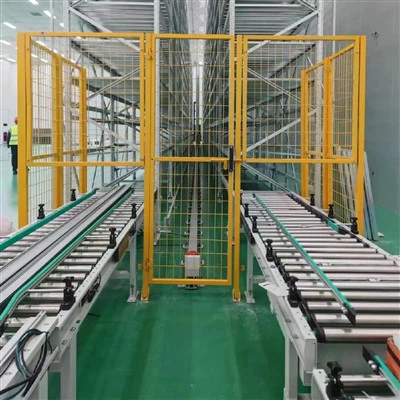
The Mini Load AS/RS System is an automated warehouse solution primarily used for storing and retrieving small-sized goods in totes or cartons. A stacker crane travels along the aisle and operates vertically to access designated storage locations, reducing the need for manual handling within the storage area.
Integrated with WMS and WCS, the system coordinates inventory allocation, equipment scheduling, and material transportation. It can also connect with conveyor systems and goods-to-person picking stations, creating a streamlined workflow from inbound storage to outbound order fulfillment.
Unlike conventional shelving systems, Mini Load AS/RS makes full use of vertical warehouse space while providing fast and accurate access to individual loads. It is particularly suitable for operations involving a large number of SKUs, frequent picking tasks, and high inventory turnover.
Technical Specifications
|
Parameter |
Specification |
|
Load Type |
Totes, bins, cartons |
|
Load Capacity |
50–200 kg per load |
|
Storage Height |
Customized according to warehouse conditions |
|
Storage Configuration |
Single-deep / Double-deep |
|
Stacker Crane Type |
Mini Load stacker crane |
|
Control System |
WMS / WCS |
|
Identification |
Barcode / RFID (optional) |
|
Material Handling |
Conveyors, optional AGV integration |
Note: The above specifications are for reference. Actual parameters depend on the selected equipment configuration and project requirements.
How Does Mini load AS/RS System Works?
Inbound Process
Totes or cartons enter the system through the inbound conveyor.
1
>>
The system identifies and registers each load using barcode or other identification technology.
2
>>
The WMS assigns a storage location based on inventory information and storage strategies.
3
>>
The WCS coordinates the stacker crane to transport the load to its designated location.
4
Outbound Process
The WMS receives an order and generates retrieval instructions.
1
>>
The WCS dispatches the stacker crane to retrieve the required tote.
2
>>
The load is transferred to the outbound conveyor.
3
>>
Goods are delivered to the picking station for order picking, sorting, or consolidation.
4
Mini Load AS/RS System Types
Based on storage depth and accessibility requirements, Mini Load AS/RS can be configured in different arrangements.
|
Configuration |
Storage Features |
Key Benefits |
Typical Applications |
|
Single-Deep Mini Load AS/RS |
One tote per storage position in depth |
Direct access to each load, flexible inventory management |
High-SKU warehouses with frequent retrieval |
|
Double-Deep Mini Load AS/RS |
Two totes stored in depth at each storage position |
Higher storage density and better space utilization |
Warehouses prioritizing storage capacity |
|
The final configuration can be customized according to tote dimensions, load weight, storage depth, SKU distribution, and required picking efficiency. |
|||
Key Advantages
High-Density Storage
Makes full use of warehouse height and reduces the floor space required for storage, helping increase overall warehouse capacity.
01
Automated Material Handling
Automates tote transportation, storage, and retrieval, reducing manual handling and improving operational efficiency.
02
Accurate Inventory Management
Works with WMS and WCS to track inventory locations and movements, supporting real-time inventory visibility and traceability.
03
Efficient Order Picking
Integrates with goods-to-person workstations to minimize unnecessary travel and improve picking productivity.
04
Flexible System Integration
Can be connected with conveyors, AGVs, robotic picking systems, and other warehouse automation equipment to support different operational workflows.
05
Applications
Mini Load AS/RS is widely used in industries where small-item storage, frequent picking, and accurate inventory management are essential.
Electronics & Semiconductors:
Storage of electronic components, precision parts, and small production materials.
Pharmaceuticals:
Automated storage of medicine cartons, pharmaceutical supplies, and medical products.
E-commerce & Retail:
High-frequency order fulfillment and multi-SKU inventory management.
Power & Utilities:
Automotive Parts: Storage and retrieval of small components, spare parts, and maintenance supplies.
Power & Utilities:
Organized storage of valves, pressure gauges, resistors, and other electrical or mechanical components used in power equipment maintenance and operations.
Manufacturing:
Automated material supply and buffer storage for production lines.

FAQ
Q1: What is a Mini Load AS/RS System?
A Mini Load AS/RS System is an automated storage and retrieval system designed for small loads such as totes, bins, and cartons. It uses stacker cranes to automatically store and retrieve goods from multi-level racking structures.
Q2: What types of goods can be stored in a Mini Load AS/RS?
It is suitable for totes, plastic bins, cartons, and other standardized small-unit loads. Typical applications include electronic components, pharmaceutical products, automotive parts, and small manufacturing materials.
Q3: What is the maximum load capacity of a Mini Load AS/RS?
The load capacity generally ranges from 50 kg to 200 kg per load, depending on the stacker crane configuration and project requirements. Customized designs can be considered for specific load conditions.
Q4: What is the difference between Mini Load AS/RS and pallet AS/RS?
A: Mini Load AS/RS is designed for smaller loads such as totes and cartons, making it suitable for piece picking and small-item inventory management. Pallet AS/RS handles palletized goods and is primarily used for bulk storage and pallet-level handling.
Q5: Can Mini Load AS/RS be integrated with a WMS and WCS?
Yes. The system can integrate with WMS and WCS to manage inventory information, assign storage locations, schedule equipment operations, and coordinate inbound and outbound processes. It can also connect with an existing ERP system.
Q6: How does Mini Load AS/RS improve order-picking efficiency?
By integrating with goods-to-person picking stations, the system automatically delivers required totes to operators. This reduces walking distances and manual searching, helping improve picking efficiency and accuracy.
Q7: Can a Mini Load AS/RS be installed in an existing warehouse?
Yes. The system can be designed for both new-build and existing warehouses. Before implementation, warehouse dimensions, floor conditions, ceiling height, column positions, and inbound/outbound workflows need to be evaluated.
Q8: How do I choose the right Mini Load AS/RS solution?
The selection depends on tote dimensions, load weight, SKU quantity, inventory turnover, required throughput, warehouse height, and available floor space. GD can evaluate these factors and develop a customized solution based on your operational requirements.
Hot Tags: Mini load asrs system, China Mini load asrs system manufacturers, suppliers, factory, 3PL Shuttle AS RS, Automated Frozen Storage System, Cold Storage Four Way Shuttle AS RS, Heavy Duty Automated Pallet Warehouse System, LIFO Four Way Shuttle AS RS, Standard Pallet Automated Storage and Retrieval System