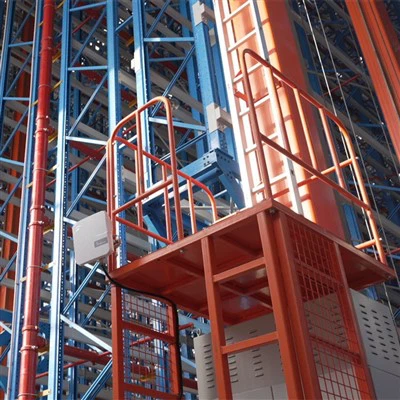
Hey there! As a mezzanine racking supplier, I often get asked about how to allocate space on mezzanine racking in a multi - user warehouse. It's a crucial aspect that can significantly impact the efficiency and productivity of the warehouse. So, let's dive right into it.
Understanding the Basics of Mezzanine Racking
First off, what exactly is mezzanine racking? Well, it's a great solution for warehouses that need to maximize their vertical space. It's like adding an extra floor to your warehouse without the need for a major construction project. There are different types of mezzanine racking, such as Heavy Duty Steel Mezzanine Racking, Pallet Racking Supported Mezzanine Floor Racks, and Pallet Rack Supported Mezzanine. Each type has its own unique features and is suitable for different storage needs.
Assessing the Warehouse Requirements
Before you start allocating space on the mezzanine racking, you need to have a clear understanding of the warehouse's requirements. This includes the types of products that will be stored, their sizes, weights, and the frequency of access. For example, if you're storing heavy and large items, you'll need a heavy - duty mezzanine racking system. On the other hand, if you're dealing with smaller, lighter items that need to be accessed frequently, a different type of racking might be more suitable.


You also need to consider the number of users in the warehouse. In a multi - user warehouse, different users may have different storage needs. Some may require more space for long - term storage, while others may need quick access to their inventory. It's important to have a conversation with all the users to understand their specific requirements.
Analyzing the Warehouse Layout
The layout of the warehouse plays a crucial role in space allocation. You need to take into account the existing infrastructure, such as columns, doors, and aisles. These elements can affect the placement and design of the mezzanine racking. For instance, if there are columns in the middle of the warehouse, you need to plan the racking around them to ensure maximum space utilization.
Another important factor is the flow of goods in the warehouse. You want to design the mezzanine racking in a way that allows for smooth movement of products. This means creating clear aisles and ensuring that there is enough space for forklifts and other handling equipment to operate.
Categorizing the Inventory
Once you have a good understanding of the warehouse requirements and layout, it's time to categorize the inventory. This involves grouping similar products together based on their characteristics. For example, you can group products by size, weight, or usage frequency.
Categorizing the inventory helps in determining the most suitable location for each group on the mezzanine racking. High - turnover items should be placed in easily accessible areas, while low - turnover items can be stored in less accessible locations.
Using a Slotting Strategy
A slotting strategy is a great way to optimize space on the mezzanine racking. It involves assigning specific locations for each product based on its characteristics and usage frequency. For example, you can use a first - in - first - out (FIFO) or last - in - first - out (LIFO) system depending on the nature of the products.
FIFO is suitable for perishable goods or products with expiration dates, while LIFO can be used for non - perishable items. By using a slotting strategy, you can ensure that the most frequently used items are always within reach, reducing the time and effort required to pick and store products.
Considering Safety and Accessibility
Safety is of utmost importance when allocating space on mezzanine racking. You need to ensure that the racking is properly installed and maintained to prevent any accidents. This includes checking the structural integrity of the racking, ensuring that the load capacity is not exceeded, and providing proper safety features such as guardrails and safety gates.
Accessibility is also crucial. You want to make sure that all users can easily access their inventory. This means providing clear signage and ensuring that the aisles are wide enough for easy movement.
Monitoring and Adjusting
Space allocation on mezzanine racking is not a one - time process. You need to continuously monitor the usage of the racking and make adjustments as needed. This could involve re - organizing the inventory, adding or removing racking sections, or changing the slotting strategy.
By regularly monitoring and adjusting the space allocation, you can ensure that the mezzanine racking is being used to its full potential and that the warehouse is operating efficiently.
Conclusion
Allocating space on mezzanine racking in a multi - user warehouse is a complex but important task. By understanding the warehouse requirements, analyzing the layout, categorizing the inventory, using a slotting strategy, considering safety and accessibility, and monitoring and adjusting the space allocation, you can optimize the use of the mezzanine racking and improve the overall efficiency of the warehouse.
If you're interested in learning more about mezzanine racking or need help with space allocation in your warehouse, don't hesitate to reach out. We're here to assist you in finding the best solution for your storage needs.
References
- Warehouse Storage and Handling Handbook
- Best Practices in Warehouse Management