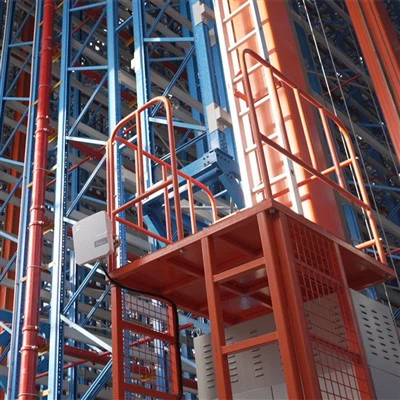
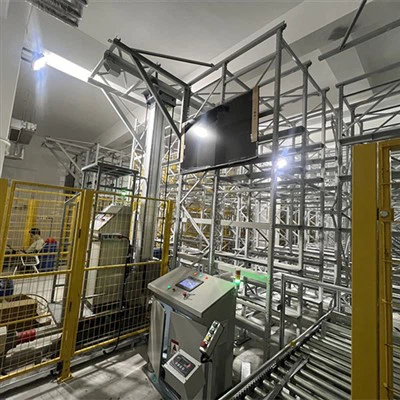
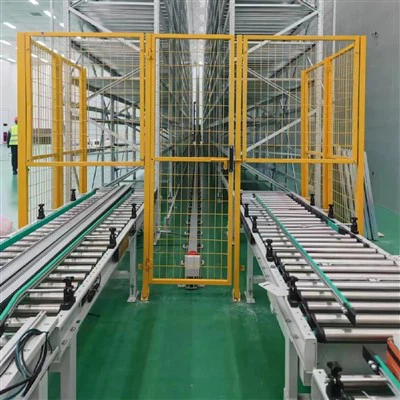
In the current situation where land costs are rising and factory space is tight, how to "seek space from above" has become the key for enterprises to reduce costs and increase efficiency. Steel platforms, with their flexible construction, strong load-bearing capacity and high utilization rate, have become the "space expansion wonder" in warehousing and production scenarios and are increasingly favored by more and more enterprises.
Steel platforms, with steel as the core building material, are constructed through components such as columns, beams, and floor slabs. They can create a 2-3 story three-dimensional space inside factories and warehouses, which is equivalent to "adding half a factory building out of thin air". Its construction does not require damage to the original ground structure. From design to completion, it only takes 15 to 30 days, far exceeding the construction efficiency of traditional concrete mezzanines. It is especially suitable for enterprises in urgent need of expansion.
In terms of advantages, the "hardcore strength" of the steel platform is particularly prominent. Firstly, it has a strong load-bearing capacity. The conventional design can bear 300 to 1000 kilograms per square meter, which can store heavy-duty shelves, production equipment and even office areas. Secondly, the space utilization rate doubles. Taking a 1,000-square-meter warehouse as an example, after building a two-story steel platform, the actual usable area can reach 1,800 square meters. Moreover, it can be divided into storage areas and operation areas according to needs, achieving "upper and lower layers and functional zoning". In addition, the steel platform can be disassembled and relocated in the later stage. If the enterprise relocates or adjusts its layout, the components can be reused, reducing long-term costs.
From the perspective of application scenarios, the steel platform has extremely strong adaptability. In manufacturing plants, the upper floor can be used as raw material storage areas, and the lower floor can be set up with production lines to reduce the distance for material handling. In e-commerce warehouses, slow-moving items are placed on the upper level while frequently dispatched goods are stored on the lower level to enhance picking efficiency. In small and medium-sized enterprises, it is even possible to build offices on the upper level of the steel platform and use the lower level for warehousing or production, achieving a "space division".
However, when choosing a steel platform, two points should be noted: First, the load-bearing grade should be determined based on the weight of the goods and the usage requirements to avoid overloading; Second, choose a qualified manufacturer to ensure that the design complies with fire protection and structural safety standards. In conclusion, for enterprises that want to make efficient use of space, steel platforms are undoubtedly a highly cost-effective choice.