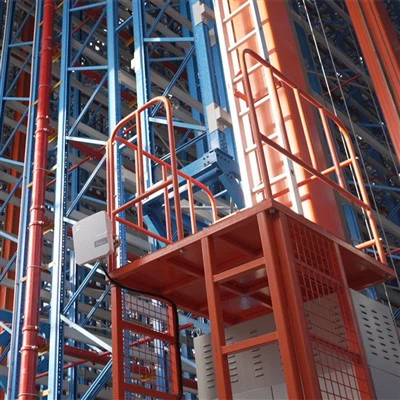
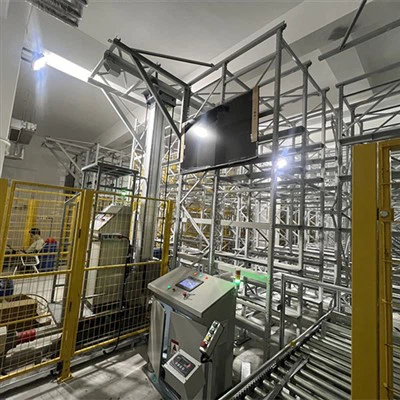
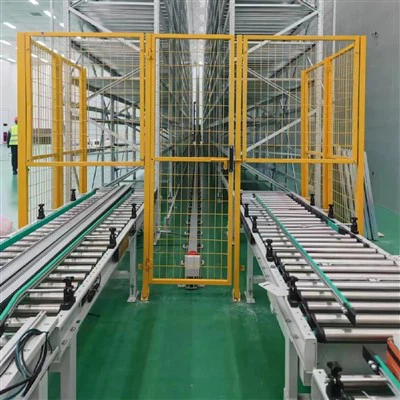
In line with the development of The Times, automated stereoscopic warehouses are constantly innovating and improving, possessing a variety of unparalleled advantages, which are precisely what the traditional logistics industry lacks and needs.
1. Space Utilization Rate
With the increase in economic construction, the value of land has risen, and the cost of factory buildings has become higher and higher. Enterprises are making greater use of space. Many years ago, due to the relatively high initial investment, automated stereoscopic warehouses began to be popularized and applied. Overall, the investment funds are constantly decreasing and are almost on par with or even lower than the initial investment funds for traditional warehouses.
2. Dynamic Storage
Automated stereoscopic warehouses can be combined with other industrial processes to form a complete industrial chain covering raw material storage, production packaging, finished product storage, and finished product sorting and distribution. Reduce the frequency and time of goods handling.
3. High security
The automated stereoscopic warehouse is equipped with advanced information technology, featuring high accuracy and reducing the rate of goods damage caused by manual operations. Equipped with barcode technology and information processing technology, it accurately tracks the flow of goods, eliminating the need for manual placement in the wrong position and wasting time searching for goods. Equipped with computerized intelligent management, it is convenient to adjust the backlog of goods and reduce the time spent manually confirming the quantity of goods repeatedly. Adapt to special environments such as darkness, low temperature and toxicity, and avoid accidental investment by personnel.
4. It features high work efficiency and low labor costs
The Industrial Revolution was born from the idea of poverty, and automation was a further step forward on this basis. In the context of the great era of global market trade, improving work efficiency means increasing the output of finished products in order to gain more profits.
Shuttle vehicles are intelligent robots that can be programmed to perform tasks such as picking up goods, transporting, and placing them. They can also communicate with upper computers or WMS systems and, in combination with identification technologies like RFID and barcodes, achieve functions such as automated identification and storage and retrieval.