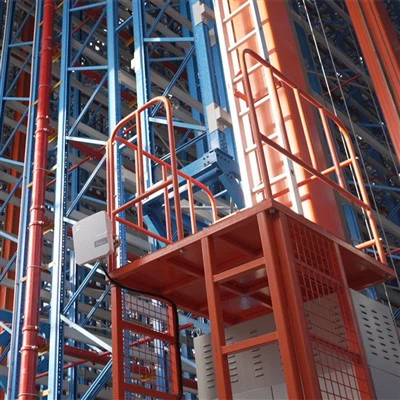
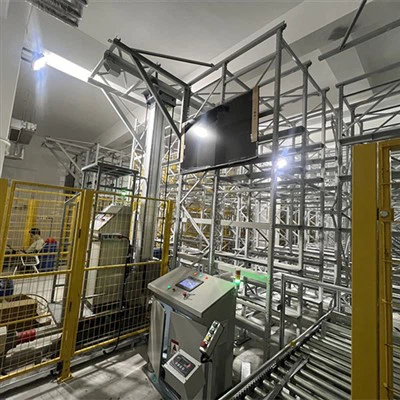
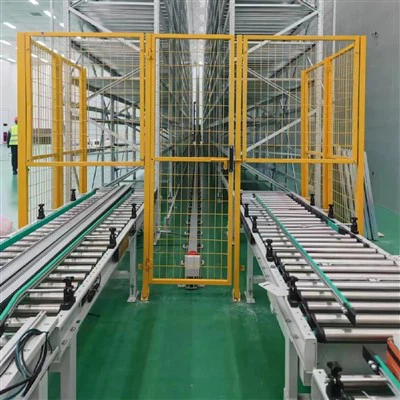
As a core solution for automated warehousing, the four-way shuttle vehicle rack has entered a mature development stage of market production standardization and application scale after decades of technological iteration and scenario verification, and has become a key equipment for logistics upgrading.
The maturity of the production end is reflected in the dual guarantee of technological breakthroughs and a complete supply chain. The core technologies have achieved a leap from following to independent innovation. Domestic enterprises have mastered core technologies such as four-way driving and intelligent dispatching by digesting and absorbing the technological achievements of institutions like the Fraunhofer Institute. The stability of a single machine is close to the world-class level. The production system has formed a standardized pattern. The shelves adopt a modular design, and the width of the aisles can be precisely controlled within 1 to 1.2 meters. The shuttle vehicles can move freely at 360° and be precisely positioned within one second. The key performance indicators tend to be unified. The supply chain is well-equipped. Through large-scale production, the manufacturing cost has been reduced to 60%-70% of that of similar products in Europe and America, and the domestic production rate of core components has significantly increased, supporting the rapid expansion of the industry.
The application end has achieved multi-industry penetration and performance verification. The market penetration rate has significantly increased. The penetration rate of shuttle vehicles in three-dimensional warehouses has reached 45%, and the overall market size has maintained a high growth rate. The application in fields such as medicine, e-commerce, and cold chain is particularly prominent. The adaptability to different scenarios has been fully verified: in the e-commerce field, it can handle the peak of orders during major promotions, and the order processing speed of a certain clothing e-commerce platform during Double 11 has increased by 60%. In the cold chain scenario, low-temperature resistant vehicle models can operate stably in an environment of -25 ℃, reducing the fresh food loss rate from 5% to 0.3%. The manufacturing industry has achieved 24-hour unmanned operation, with production capacity increasing by more than 30%.
There is still room for improvement in the current maturity: The core algorithms in the high-end market lag behind the international leading level, and AI scheduling is mostly in its infancy. Suppliers with complete project implementation capabilities are relatively scarce, and the technical threshold for small and medium-sized enterprises is relatively high. Overall, the four-way shuttle car rack has completed its transformation from technical verification to large-scale application. Its core advantages, such as a 90% increase in space utilization, a 50% increase in efficiency, and maintenance costs that are only one-third of those of stacker cranes, are accelerating the transformation of the warehousing industry from traditional models to intelligent dense storage.