Under the wave of intelligent manufacturing, automated handling equipment has become the core engine of modern logistics systems. RGV (Rail-Guided Vehicle) and AMR (Autonomous Mobile Robot), as two mainstream technical routes, each play a significant role in different application scenarios with their unique advantages and functions, injecting strong impetus into the development of smart logistics. Whether in the warehousing center, production workshop or distribution link, one can always see their busy and efficient figures. They are quietly changing the operation mode of the logistics industry and leading the industry towards a new era of intelligence.
Analysis of the Core Differences between RGV and AMR
Although both types of equipment belong to automated handling tools, there are significant differences in navigation methods, flexibility and maintenance costs:
1. Freedom of navigation and path
1) RGV: A high-precision heavy-load expert under orbital constraints
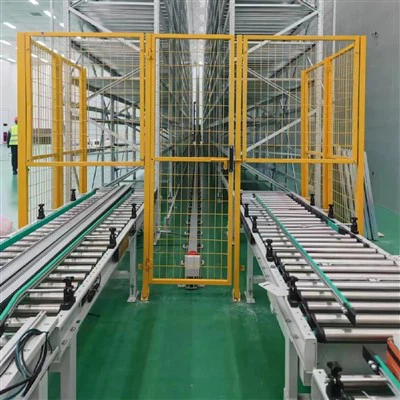
RGV, or "Rail-Guided Vehicle", is mainly composed of the frame, drive wheels, following wheels, front and rear bumpers, chain conveyor, communication system, electrical system and various cover plates. These components work in coordination, endowing RGV with powerful handling capacity. During operation, the RGV shuttles along the pre-determined track in an orderly manner, accurately transporting goods to the designated position. The operation process is stable and reliable, and the movement trajectory is precisely controllable.

2) AMR: Algorithm-driven Spatial Reconfigurator
As an "autonomous mobile robot", AMR is usually equipped with various sensors such as lidar, cameras, and ultrasonic radars. These sensors are like the eyes and ears of AMR, capable of perceiving the surrounding environmental information in real time. AMR conducts in-depth analysis of the data collected by sensors through intelligent algorithms, thereby forming a profound understanding of the on-site environment. On this basis, AMR can independently choose the most optimized mode of action and path to efficiently complete tasks.

2. Comparison of Core technical Parameters between RGV and AMR

3. The degree of intelligence
The intelligence level of RGV is relatively low, and it is better at performing simple and repetitive tasks. On the production line, RGV moves materials from one station to another along the track according to the preset program, without having to make too many judgments and decisions regarding complex environmental changes. Its operation is relatively simple, mainly achieving basic movement and handling functions through pre-written programs and control systems. However, its ability to respond to some unexpected situations or complex scenarios is rather limited.
In contrast, an AMR is like a senior technician with a smart brain, possessing powerful perception and decision-making capabilities. It can not only perceive the surrounding environmental information in real time, but also conduct in-depth analysis and processing of this information, thereby making reasonable decisions. In multi-robot collaboration scenarios, AMRs can communicate and collaborate efficiently with other robots. Based on the overall task requirements and real-time conditions, they can autonomously coordinate their actions to achieve optimal resource allocation and efficient task completion.
4. System Complexity and Maintenance
The RGV structure is relatively simple. This concise design enables it to have strong anti-interference ability against the external environment, high operational stability and a low failure rate. The structural design of AMR varies depending on the navigation method and application scenarios, with a relatively high overall complexity. It integrates precise sensors such as liDAR and IMU, and has a relatively high technical threshold for maintenance.
Applicable scenarios: Technical selection that matches business requirements
Selecting suitable equipment based on the characteristics of logistics tasks is the key to maximizing the efficiency of automation
1. Prioritize scenarios where RGV is preferred
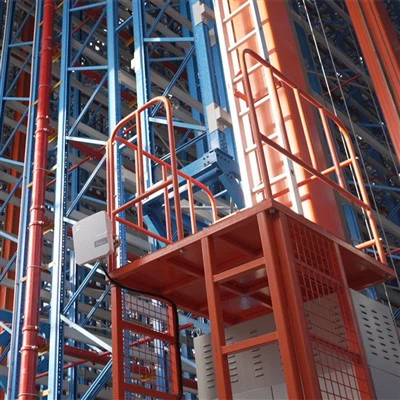
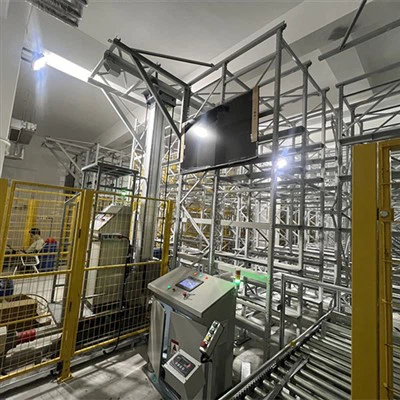
1) High-density stereoscopic warehouse: Among various stereoscopic warehouses with high-density storage methods, RGV is an ideal choice. The trolley aisle can be designed to any length as needed. When transporting goods, no other equipment is required to enter the aisle, effectively improving the utilization rate of warehouse space and operational efficiency.
2) Material handling on production lines: In manufacturing production lines, RGVS are often used for precise transportation of materials between different workstations. The positioning accuracy reaches ±2mm. Its operational stability and high-precision positioning capability have effectively guaranteed the normal operation of the production line.
3) Fixed-process and high-frequency operation scenarios: For some scenarios with fixed operation processes, frequent handling tasks, and extremely high requirements for path accuracy, RGV performs exceptionally well.

2. Prioritize scenarios where AMR is preferred
E-commerce and express delivery warehousing: Orders in the e-commerce and express delivery industries are characterized by high frequency, small batch sizes, and a wide variety of products, which places extremely high demands on the flexibility and response speed of warehousing and logistics. AMR can be closely integrated with the warehouse management system (WMS), automatically planning paths based on order information, quickly reaching the shelf area to pick goods, and transporting them to the packaging area or shipping area, achieving an efficient "goods-to-person" picking mode.
2) Flexible production in manufacturing: As manufacturing moves towards flexibility and customization, the demand for flexibility in material handling during the production process is increasing day by day. AMR can adjust the handling path and task allocation in real time according to the changes in production tasks, and seamlessly integrate with production lines, assembly lines, automated equipment, etc., to achieve the automated transportation and distribution of raw materials, semi-finished products and finished products.

3) Special environment operations: In industries with strict environmental requirements such as pharmaceuticals, food, and electronics, as well as in some places with special environments like high and low temperatures, dust, and radiation, AMR, with its advantages of automation and intelligence, can replace manual labor to complete material handling tasks, avoiding the impact of human factors on product quality and the environment.
In the design of automated stereoscopic warehouses, RGV and AMR are not mutually exclusive options. The hybrid scheduling mode is becoming a new trend: for instance, RGV is used for the inbound of heavy raw materials, while the outbound sorting is carried out by the AMR cluster and then uniformly coordinated through the WMS (Warehouse Management System). With the decline in the cost of visual navigation AMRs and the emergence of lightweight RGVS, the boundaries of future devices will further blur. The core of the selection lies in deeply deconstructing the business flow - for stable scenarios, RGV is chosen to reduce costs and increase efficiency, while for transformation scenarios, AMR is used to reserve flexibility. Only in this way can the optimal solution be achieved between efficiency and resilience.