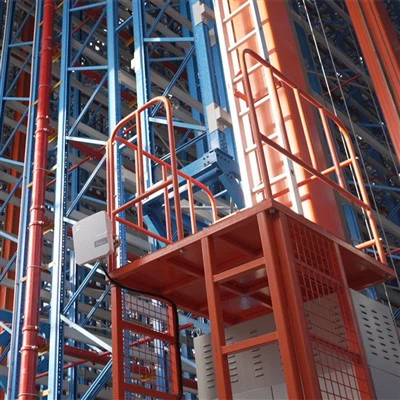
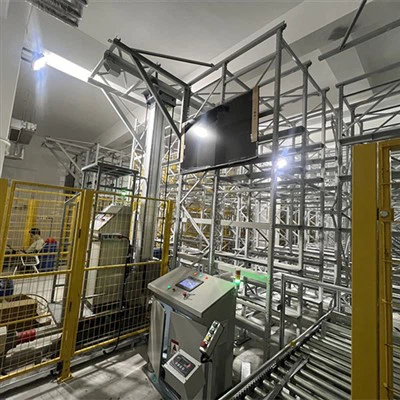
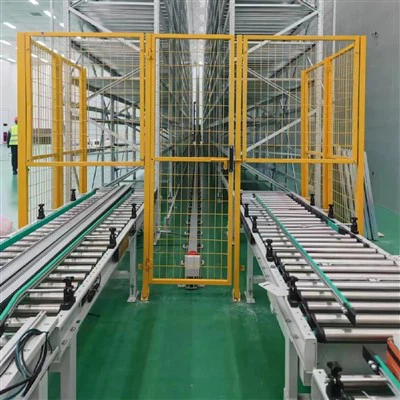
In modern warehousing systems, the selection of shelving is crucial for improving warehouse space utilization and operational efficiency. Shuttle racking, as an advanced warehousing solution, is gradually gaining favor among more and more businesses. So, what are the advantages and characteristics of shuttle racking? How does it differ from traditional beam racking? Let's take a closer look.
1. Structural Design
Beam-type racking systems consist of a simple structure of uprights and beams, with goods typically placed directly on the beams. Shuttle racking systems, on the other hand, are composed of the racking body, shuttle tracks, and shuttle cars, resulting in a relatively more complex structure.
2. Space Utilization
Shuttle racking tracks are designed in parallel, allowing for multiple rows and greater storage depth. This reduces the need for forklift aisles compared to other racking systems, significantly improving space utilization. While conventional beam-type racking systems have a space utilization rate of 30% to 35%, shuttle racking systems can achieve approximately 80%. Under the same warehouse area, shuttle racking systems can store more goods, saving businesses on warehousing costs.
3. Operation Method
Beam-type racking systems primarily rely on manual handling of goods or the use of forklifts for storage and retrieval. Operation efficiency is relatively low and easily affected by human factors. Shuttle racking systems, equipped with shuttle cars, can automatically run on the racking tracks, enabling rapid goods entry and exit. This eliminates the need for manual handling, significantly saving time and labor costs while improving operational efficiency.
4. Applicable Scenarios
Beam-type racking systems are suitable for storing a wide variety of goods in small batches, with relatively few restrictions on the size and weight of the goods. However, in scenarios with large storage volumes and frequent entry and exit of goods, the operational efficiency is low. Shuttle racking systems are suitable for large storage volumes of relatively homogeneous goods, especially for businesses that require high efficiency in goods entry and exit, such as e-commerce, pharmaceuticals, and food industries. Furthermore, shuttle racking systems can be customized according to the actual conditions of the warehouse, adapting to different warehouse layouts and height requirements.
Compared to traditional beam-type racking systems, shuttle racking systems have significant differences in structural design, operation method, space utilization, and applicable scenarios. When choosing a racking system, businesses should consider various factors based on their business needs and actual warehouse conditions to select the most suitable warehousing solution.
Since 2006, Guandi Intelligent has been dedicated to the research, development, and production of racking systems and related warehousing equipment. To better integrate the company's production and business resources and improve service quality, we re-established Nanjing Guandi Logistics Technology Co., Ltd. in 2020, focusing on the research and development and production of warehousing equipment such as shuttle cars, shuttle racks, and beam racks.
The company utilizes advanced production equipment and a modern enterprise management model, possessing strong technical capabilities and mature production processes. Strict adherence to national technical standards ensures consistent product quality. We have obtained more than 30 patents, including invention patents, design patents, utility model patents, and software copyrights. We are a cooperative supplier to well-known enterprises and institutions such as Industrial and Commercial Bank of China, State Grid Corporation of China, Aviation Industry Corporation of China, and Sinopharm Logistics.