In today's era, the digital economy is sweeping across the globe like a powerful tide. According to relevant data, China's digital economy accounts for over 30% of its GDP, making it the world's second-largest economy. This data profoundly demonstrates the important position of the digital economy in my country's economic landscape. It is no longer an emerging economic form, but has become a core force driving economic development, fundamentally changing traditional economic models and business operations.
For traditional enterprises, this presents both unprecedented challenges and crucial opportunities to unlock future development. The business models, management methods, and market strategies that traditional enterprises have long relied on are facing severe challenges under the impact of digital technology. The market competitive landscape has been completely reshaped. Those enterprises that can quickly master digital technology and integrate it into various aspects of production, sales, and management, thereby improving production efficiency, reducing costs, and accurately grasping market demand, will stand out in the competition and gain a larger market share.
Automated Warehouses: The Core Engine of Traditional Enterprise Transformation
(I) Definition and Composition
An automated warehouse is an intelligent warehousing system that utilizes modern technologies such as computer technology, automatic control technology, and mechanical engineering technology to achieve intelligent storage, handling, and management of goods. It mainly consists of four key components: goods access mechanisms, storage mechanisms, conveying equipment, and control devices.
(II) Unique Advantages of Automated Warehouses
(1) High-Efficiency Operation, Significant Reduction in Time Costs
In automated warehouses, advanced automated equipment such as intelligent stacker cranes, high-speed conveyors, and sorting robots act like a team of well-trained steel soldiers, tirelessly and accurately completing the storage, handling, and sorting of goods. Traditional warehouses, on the other hand, rely mainly on manual operation, resulting in slower handling speeds and a higher likelihood of fatigue and errors, leading to low operational efficiency.
(2) Precise Inventory Management, Enhanced Management Accuracy
In automated warehouses, the application of intelligent sensors and IoT technology is like giving the warehouse "sensory nerves" and a "smart brain," enabling enterprises to grasp detailed inventory information in real time. Intelligent sensors are distributed throughout the warehouse, accurately monitoring the location, quantity, and status of goods, and transmitting this data to the warehouse management system in real time via the Internet of Things. The warehouse management system acts like a shrewd housekeeper, conducting in-depth analysis and processing of the data, providing enterprises with accurate inventory reports and decision-making basis. In contrast, traditional warehouse inventory management relies mainly on manual counting and recording, which is not only inefficient but also prone to errors, preventing enterprises from accurately and promptly understanding their inventory situation, thus affecting the smooth operation of production and sales.
(3) Intelligent Space Utilization, Reaching New Heights in Efficiency
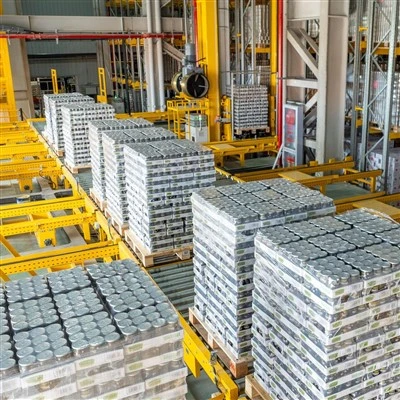
Automated high-bay warehouses, as the "space magicians" of automated warehouses, fully utilize vertical space, greatly increasing storage capacity and space utilization. By adopting high-rise shelving and automated access equipment, the warehouse's storage area is extended from the ground to the air, making full use of the warehouse space. The design and layout of the shelving utilize optimized solutions, making the storage of goods more compact and orderly. At the same time, intelligent algorithms are used to plan the access paths of goods, reducing equipment running time and energy consumption, and improving operational efficiency. In addition, automated warehouses can flexibly adjust the storage layout according to actual needs, achieving dynamic space optimization. In contrast, traditional warehouses, due to limitations in building structure and manual operations, have lower space utilization rates and often have a large amount of unused space, failing to meet the growing warehousing needs of enterprises.
(4) Safe and worry-free, a "safer" working environment
In automated warehouses, the handling, storage, and sorting of goods are mainly completed by mechanical equipment. Personnel only need to perform remote operation and management in the control room, avoiding the potential dangers of direct contact with goods and equipment. Automated equipment is also equipped with a series of safety protection devices that can promptly detect and handle abnormal situations during equipment operation, ensuring the safety of equipment and goods. In addition, the warehouse is equipped with a comprehensive fire protection system, monitoring system, and alarm system, which can monitor the safety status of the warehouse in real time. Once an abnormal situation is detected, an alarm is immediately issued and corresponding measures are taken, providing comprehensive safety protection for personnel and equipment. Traditional warehouses, due to more manual operations and relatively simple safety facilities, are prone to safety accidents such as goods collapse and personnel injuries, causing huge losses to enterprises.
Case Analysis: Examples of Successful Enterprise Transformation
In the journey of traditional enterprises transforming with the help of automated warehouses, many enterprises have stood out and become successful examples in the industry. Their practical experience is like shining stars, illuminating the way forward for other enterprises and providing valuable lessons and inspiration.
01 A Vietnamese paper company's four-way shuttle car automated warehouse
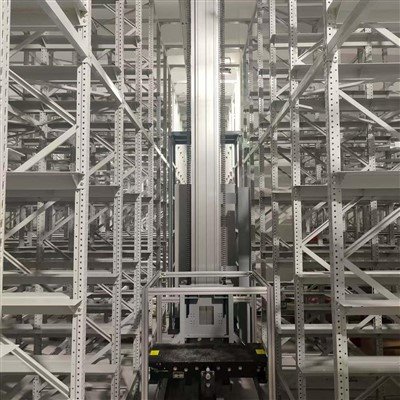
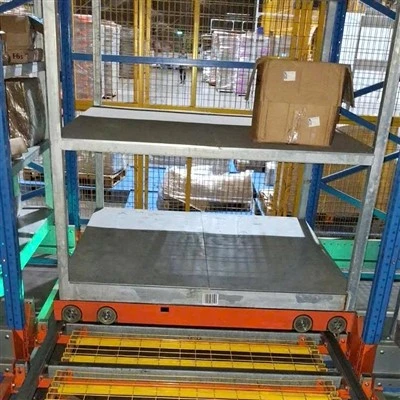
Equipped with a racking system, a four-way shuttle car system, an AGV handling system, a conveyor system, and a computer management and scheduling system. It builds a refined and visualized management and control environment for warehouse resources, planning, execution, and control, establishing the basis for data association and transmission with other systems, and realizing digital management and intelligent inbound and outbound operations.
02 Smart warehousing solution for a garment company in Yangzhou
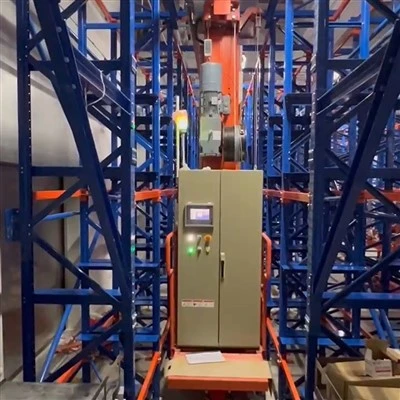
The warehouse uses multi-layer automated racking, equipped with stacker cranes and a complete set of conveying equipment. At the same time, Guandi Intelligent also provided it with a warehouse management system and equipment scheduling and control system software. Through dynamic balance algorithms, it optimizes inventory management, timely predicts demand and adjusts inventory, and realizes intelligent scheduling and control of the warehouse conveyor line.
03 Smart Warehouse Solution for a Production Line-Side Warehouse at an Electronics Company
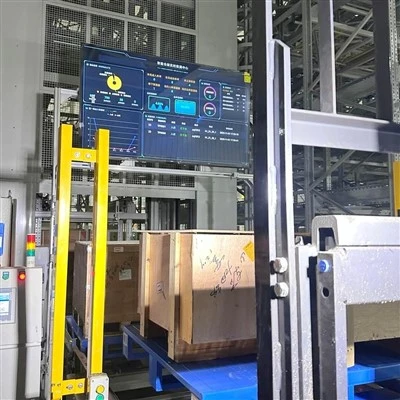
Guandi Intelligent assisted an electronics engineering design unit in completing the automation and intelligent upgrade of its production line-side warehouse. The line-side warehouse was integrated with other shelving systems, sealed compartment systems, and WCS & WMS software systems. Under the unified scheduling and management of the WMS system, it provides timely and efficient material delivery to the production line. The average composite operation of a single stacker crane is 65 boxes/hour, the average time for material box entry and exit is ≤1.5 min/box, and the single-machine automatic entry and exit accuracy is 100%. The warehouse can operate continuously for 24 hours, greatly improving production efficiency and achieving automated scheduling, all-day operation, and intelligent management of the line-side warehouse.
04 Smart Warehouse Solution for a State Grid Central Warehouse
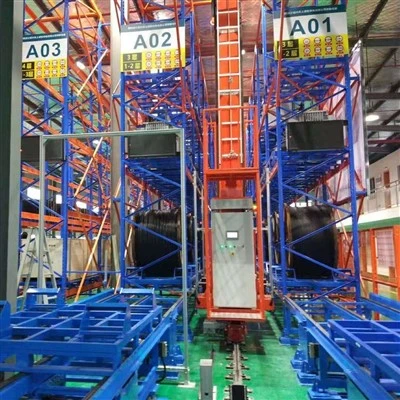
A central warehouse of the State Grid, serving as a regional power emergency material reserve center, covers an area of over 2000 square meters and mainly stores materials such as transformers and cable reels. In the event of geological disasters in the surrounding area, it can quickly ship and sort materials, providing emergency supplies to the disaster area as quickly as possible.
The Future: Automated Warehouses Lead Traditional Enterprises on a New Journey
In the vast starry sky of the digital economy, automated warehouses are undoubtedly one of the most dazzling stars, illuminating the path forward for the transformation of traditional enterprises. It is not only a technological upgrade but also a key support for strategic transformation. In the future, the development prospects of automated warehouses are full of unlimited possibilities. With the continuous innovation and integration of technologies such as artificial intelligence, the Internet of Things, and big data, automated warehouses will move towards a more intelligent, efficient, and environmentally friendly direction.