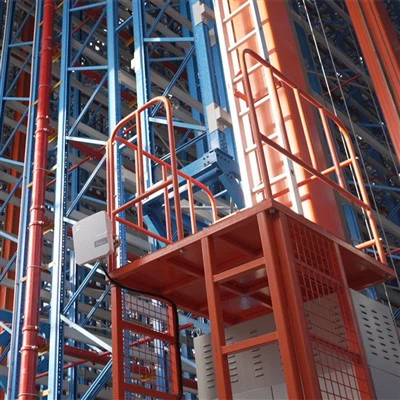
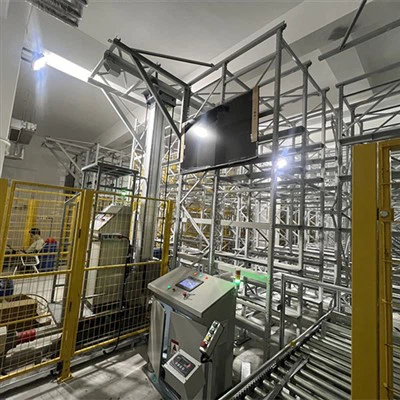
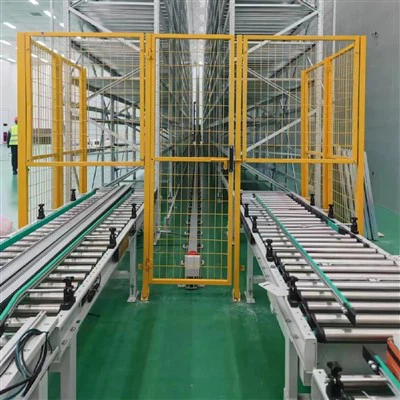
In the eyes of many warehouse workers, building an automated stereoscopic warehouse is like assembling large "steel building blocks". Only when you are on the spot can you be truly impressed: the "steel forest" on the open ground rises up from the ground, with each column having a vertical error of no more than 3 millimeters. Even the tightening force of a single screw has to be precise to the "newton-meter" with a torque wrench - how could this be simple assembly? It was clearly a precise surgical operation! Today, let's delve into the birth site, explore the entire process from nothing to something, and uncover the construction code that will ensure smooth operation over the next 20 years.
Preparations before construction: Determine the installation position of the shelves, clear the construction area, and ensure that the construction environment meets the requirements.
"Don't rush to tighten the screws!" First, clean up the venue thoroughly. Before construction, two meticulous tasks should be focused on:
1. The site clearance must be thorough: sweep away dust and debris, inspect the cement lumps and residual embedded parts on the ground, mark the drainage outlets and fire hydrants with red paint to avoid blocking key facilities.
2. The environment must meet the standards: Use a thermometer and hygrometer to measure the humidity (ventilate first when it exceeds 60% to prevent steel from rusting), and use a laser rangefinder to measure the dimensions again. If the actual distance between the 2.5-meter shelves on the drawing is 5 centimeters off, the drawing should be adjusted in time to avoid being "crowded" after installation."


Install the bottom corners: According to the design requirements, connect and fix the bottom corners to the ground, and determine the position and levelness of the shelves.
The bottom corner is the "foot" of the shelf. Don't be fooled by its unremarkable appearance. If it's not installed steadily, the shelf might "tilt its neck". The key to installing the bottom corner lies in "accuracy" and "flatness" :
First, place the bottom corners at the designated positions according to the markings on the design drawings and fix them with chemical bolts. For heavy-duty shelves, the bottom corners should be fastened with M16 or higher bolts, which should be screwed into the ground by at least 12.5 centimeters to ensure they cannot be pulled out.
2. Then, use a laser level to measure the level point by point. The horizontal deviation of each bottom corner should be ≤2 millimeters per meter. For example, for a 2-meter-long bottom corner, the height difference between the two ends should not exceed 4 millimeters.

Install the vertical columns and fix them to the bottom corners with anchor bolts.
The column is the "waist" of the shelf and must stand straight. There are two "hard standards" for installation:
1. The fixation must be "firm" : Align the bottom corner connection parts, and use a torque wrench to tighten the bolts to the appropriate torque (if they are too loose, they will shake; if they are too tight, they will crack). For heavy-duty shelf columns, add "reinforcing ribs" and weld them to the bottom corner. Welding them together with the bottom corner will make the wind resistance more stable.
2. The verticality must be accurate: calibrate each piece with a plumb Bob, with a deviation of no more than 3mm per meter (no more than 36mm for a 12-meter height). Whether the column is straight or not is related to the level of the crossbeam installation and the smooth movement of the stacker crane.

Install the crossbeam: Connect and fix the crossbeam to the column, ensuring that the spacing and position between the crossbeam and the column are accurate.
The crossbeam is the "arm" of the shelf, responsible for supporting the storage positions. If the spacing or position is slightly off, the pallets cannot be placed inside. The core installation lies in "alignment" and "clamping" : There are uniform round holes and diamond-shaped holes on the columns. The clamps at both ends of the crossbeam must be aligned with the holes of the same height. For example, the left column should be aligned with the 10th one, and the right column should also be aligned with the 10th one. Otherwise, the crossbeam will be "one high and one low".
Insert the clips into the holes and secure them tightly. Then, fix them from the side with bolts to prevent loosening. After installation, use a level to measure the levelness to ensure that the pallet will not "tilt and slip" when placed on it.

Improve the fixation and support: Inspect and adjust the installed shelves to ensure the effectiveness and stability of the fixation and support measures.
"Installation is not the end. It needs to be checked as if looking for faults." " To improve fixation and support, three things need to be done:
1. Check the "tightening degree" : Use a torque wrench to retighten all bolts, with a focus on verifying the connection between the column and the bottom corner, as well as between the crossbeam and the column. Any loose bolts need to be tightened to the specified torque.
2. Check "verticality and levelness" : Use a plumb Bob to measure the column and a level to measure the crossbeam. Installation vibration may cause deviations. Adjust in time if any problems are found.
3. Supplement "support components" : Add diagonal braces at the corners of the shelves and lateral supports in the middle of high-rise shelves to enhance stability and prevent the shelves from shaking.

From precise foundation treatment to millimeter-level shelf installation, from the precise alignment of core stacker cranes to the integrated debugging of control systems, every step of the construction of automated stereoscopic warehouse shelves embodies precise engineering wisdom. With the continuous development of Internet of Things (iot) technology and artificial intelligence, future automated stereoscopic warehouses will be more intelligent and better adapt to the constantly changing market demands.