Since the end of the 19th century, cold storage has played a significant role in the logistics industry, mainly providing a constant temperature and humidity storage environment for semi-finished and finished products such as food, green plants, tea, medicine, chemical raw materials, electronic instruments, tobacco, and alcoholic beverages.
Due to the special environment of low temperature and high humidity in cold storage, when installing shelves, it is necessary to ensure that the shelves have stable load-bearing capacity, are resistant to corrosion and can adapt to low temperatures, while also avoiding deformation, damage or potential safety hazards caused by environmental factors. This is a complex systems engineering project involving materials science, structural mechanics and thermal engineering, and it requires strict construction management.
Now, let's talk about the core points to note when installing cold storage shelves from aspects such as material selection, structural design, and installation techniques.

Part.1/ Material Selection: Suitable for low-temperature and high-humidity environments
The temperature inside cold storage is usually between -25 ℃ and 8℃ (≤-18℃ for frozen storage and 0℃ to 8℃ for refrigerated storage), and the humidity is relatively high (RH 85% to 95%). Ordinary steel is prone to low-temperature embrittlement and rusting. When choosing materials, special attention should be paid to their low-temperature resistance and anti-corrosion performance.
For load-bearing components, choose "low-temperature resistant steel" : For the main load-bearing parts of the shelves such as the uprights and beams, it is recommended to use special low-temperature resistant steels like Q355D and Q235D. Even at temperatures as low as -40 ℃, they can maintain good toughness and are not prone to cracking. Never use ordinary Q235 steel. When the temperature drops below -10 ℃, the toughness of this steel will decline and it may break under load.
2. Surface anti-corrosion treatment must meet the standards: In the surface treatment of cold storage shelves, epoxy polyester electrostatic powder coating is the most common choice. This approach is highly suitable for cold storage scenarios where the requirements for anti-corrosion and rust prevention are not overly strict. It is not only economical and practical but also meets the basic rust prevention needs, offering a very high cost-performance ratio. However, it should be noted that if higher requirements are placed on anti-corrosion and rust prevention, hot-dip galvanizing treatment should be considered. Hot-dip galvanizing involves immersing the rust-removed steel parts into molten zinc at around 500℃, causing a zinc layer to adhere to the surface of the steel components, thereby achieving the purpose of anti-corrosion.

3. Avoid plastic parts for accessories: For the connecting parts of the shelves (such as bolts, clamps), supports and other accessories, ordinary plastic will become hard, brittle and crack at low temperatures, which may cause the accessories to fall off. For components that need to move, such as pulleys and guide rails, low-temperature resistant grease should be used to prevent the lubricating oil from freezing and affecting sliding.
Part.2/ Structural Design: Balancing load-bearing capacity and low-temperature deformation
1. Reserve a low-temperature shrinkage gap: The design must take into account the "thermal expansion and contraction" effect. A low-temperature environment can cause steel to shrink. At -30℃, the shrinkage of steel compared to normal temperature can reach 3mm/10m. If the structure design of the shelves is unreasonable, problems such as component misalignment and increased gaps are likely to occur, which will affect stability.
2. Connection and node design: High-strength bolt connections should be preferred over welding. Welding can cause microscopic stress concentration in the weld seam area, which becomes a source of cracks at low temperatures.
Part.3/ Installation Process: Strictly control precision and safety standards
The working environment for cold storage installation is harsh, and the installation accuracy of the shelves directly affects the safety of subsequent use. Therefore, it is necessary to strictly follow the installation norms in low-temperature environments
1. Environmental pretreatment before installation:
1) Ground curing treatment: Before installation, it is necessary to ensure that the ground of the cold storage has completed low-temperature curing treatment (ground flatness error ≤2mm/meter), and there is no damage to the ground waterproof layer and insulation layer.
2) "Hot shelves" are prohibited from being directly stored in the warehouse: All shelf components must be pre-assembled outside the warehouse and then moved to a buffer zone at -5℃ to -10℃ to stand for 24 to 48 hours to fully cool down and release thermal stress before final installation and commissioning. This measure can prevent the components from generating internal stress due to uneven contraction when entering ultra-low temperatures.
2. Core installation accuracy control
1) Column verticality: The verticality error per meter is ≤1mm, and the total height error is ≤5mm to prevent the column from tilting and causing the overall instability of the shelf.

2) Crossbeam levelness: The height difference between the two ends of the crossbeam on the same layer should be ≤2mm to prevent the goods from tilting after being placed.
3) Bolt tightening: Use a torque wrench to tighten according to the specified torque. Also, install anti-loosening washers to prevent the bolts from loosening due to the thermal expansion and contraction of metals at low temperatures.
Part.4/ Safety Protection: Guard against the unique risks of low-temperature environments
During the operation of cold storage shelves, safety hazards are prone to occur due to factors such as low temperatures and condensation water. Protective measures should be taken simultaneously during installation
1. Install anti-collision and anti-slip devices: Special anti-collision feet for low temperatures (steel plates with a thickness of ≥5mm) should be installed on the columns on both sides of the shelf aisles to prevent forklifts from colliding due to obstructed visibility during low-temperature operations.

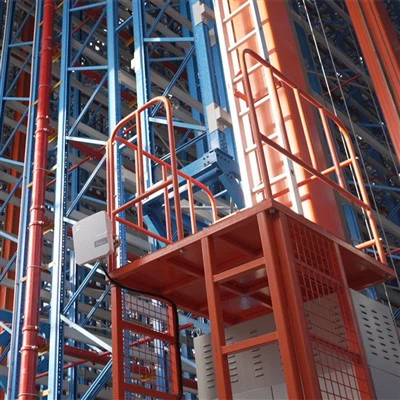
2. Reserve maintenance and escape space: A maintenance passage of ≥300mm should be reserved between the shelves and the cold storage walls as well as between the shelves to facilitate later maintenance. If it is a high-rise shelf (with a height of ≥8 meters), a maintenance platform should be set up at the top of the shelf, and the height of the platform guardrail should be ≥1.2 meters to ensure the safety of maintenance personnel.
The installation of cold storage shelves should revolve around the three core aspects of "adapting to low temperatures, ensuring safety, and balancing efficiency", and form a full-process control from materials, design, craftsmanship to protection. Only by fully considering the impact of low-temperature and high-humidity environments on the shelves can the long-term stable operation of the shelves be ensured, providing safe and reliable support for the storage of goods in cold storage.